Gallery Auto Trend Car
Showing posts with label Opel. Show all posts

Wednesday, March 3, 2010

New Opel Meriva: Opening the door to greater flexibility [Video]


Geneva/Rüsselsheim. Innovative, versatile and stylish: the second generation Opel Meriva, making its world premiere at Geneva, raises the bar for automotive versatility. It is packed with a multitude of innovative features, engineered to optimize the flexible use of space and presented in a distinctive, contemporary design.

Opel created a new market segment for small, affordable monocabs when it launched the first generation Meriva in 2003. With its revolutionary FlexSpace rear-seating concept, high seating position and roomy cabin, it has always been big on flexibility yet small in size.

Now the second generation Meriva takes affordable, on-board flexibility to a new level. It introduces FlexDoors, innovative rear-hinged rear doors that facilitate cabin access - an industry first for a volume manufacturer. Greater interior stowage space is also enhanced by FlexRail, a revolutionary concept for adaptable center console storage. All this, in addition to an easy-to-use FlexSpace seating system and the option of Opel's unique FlexFix integrated rear bicycle carrier.

The Meriva's dynamic proportions brings elegance to the small monocabs. Its expressive exterior and interior styling carries forward Opel's new award-winning sculptural design language already introduced on the Insignia and Astra. A distinctive wave graphic for the rear side windows accentuates the Meriva's FlexDoors, while also improving the view for rear passengers, particularly children.

2010_Opel-Meriva

Entering a new era of doors

Meriva opens up a new dimension in rear seat access with its unique rear-hinged rear doors. Unlike some current designs, the Meriva's FlexDoors are full-sized. The use of a conventional B-pillar enables them to be opened independently, without the need for a clamshell overlap by the front doors.

FlexDoors make it easy to get in and out of the rear seat without any twisting or sliding. It's also more convenient for parents to reach in to help buckle up children. For optimum access, FlexDoors open up to 84 degrees, much wider than conventional doors. The Meriva's front occupants also enjoy the same wide-opening access.

When the front and rear doors are open at the same time, a natural safety zone is also created. A door no longer separates a child and its parent and parents can keep an eye on their kids, for example, when getting out of the car. It's also more convenient for the driver or front passenger to open a FlexDoor when stowing a jacket, briefcase or an umbrella behind the front seat, for example.

Apart from better ergonomics, FlexDoors add a touch of style. Stepping in and out of the vehicle not only feels much more natural, it looks cool and elegant.

The FlexDoors concept has been successfully market-tested with Meriva customers since 2006. A patented locking system including a highly-sophisticated FlexDoors logic ensures the passengers are always protected whenever the vehicle is in motion.

2010_Opel-Meriva

New dimensions in on-board versatility

Increased flexibility is extended to all areas of the new Meriva. The innovative FlexSpace rear seating system has been further developed and refined and it is now more intuitive to move or fold the seats down, making the system easy to use.

Throughout the cabin, storage space is considerably increased with convenient locations provided for items which are most commonly carried inside a car. The revolutionary FlexRail console system consists of exchangeable storage units that slide on aluminum rails located between the front seats. It provides convenient and adaptable storage for many different uses. The FlexRail system was made possible because of the high mounted gear shift lever and the electric parking brake.

The new, generously proportioned seats, similar to those of the Astra and Insignia, offer a class-leading range of adjustment - 240 mm forwards/backwards and 65 mm in height.

2010_Opel-Meriva

Monocab expression of new Opel design

Meriva moves forward Opel's new, expressive design language - sculptural artistry meets German precision - with the same focus on quality already seen on Insignia and the new Astra.
A lower, sweeping roof-line and Opel's signature blade side-body motif combine with the wave rear window line to give the new Meriva a fresh, distinctive character.

Inside, the wraparound wing-shaped instrument panel enhances the feeling of width and roominess, while the forward-leaning center stack also adds sculptured space. The cabin is available with six different levels of color and trim, the widest choice ever offered for a single Opel model.

2010_Opel-Meriva

Efficient performance

The new Opel Meriva will be offered with an engine line-up ranging from 55 kW/75 hp to 103 kW/140 hp. All engines comply with the Euro5 emissions standards.

The gasoline line-up will offer three variants of the 1.4-liter multi-valve engine. Variable valve timing, for improved breathing, is a feature of the entry 100 hp 1.4-liter, the only naturally-aspirated unit in the line-up. The choice is completed by the 1.4-liter Turbo engine introduced on the new Astra range, offered here in two output versions: 88 kW/120 hp or 103 kW/140 hp. The top-of-the-line 1.4 Turbo is equipped with a 6-speed manual gearbox.

The diesel line-up starts with a 55 kW/75 hp, 1.3 CDTI engine fitted with closed loop technology. This control system improves fuel consumption: Opel is the first to adopt it on such a small engine. The diesel offer is completed with the 1.7 CDTI motor (74 kW/100 hp) with a six-speed automatic transmission.

Later this year, the engine line-up will gain three additional diesel variants: A low CO2 emitting ecoFLEX variant will be powered by the 70 kW/95 hp 1.3 CDTI engine. Two variants of the 1.7 CDTI engine will also be available, developing 81 kW/110 hp and 96 kW/130 hp respectively; both are equipped with the 6-speed manual transmission.

The new Meriva benefits from a longer wheelbase and wider front and rear tracks, which contribute to improved handling and greater ride comfort.

2010_Opel-Meriva

New champion

"With the Zafira Flex 7 and the Meriva's FlexSpace seating concepts, we invented a new fully integrated, on-board flexibility," says Alain Visser, Vice President Sales, Marketing and Aftersales Opel/Vauxhall. "For the new Meriva, we wanted to engineer the new versatility champion in the automotive industry. I don't see any other car offering so many features that make life easier."

Designed and developed at Opel's engineering center in Rüsselsheim, Germany, the new Meriva will be built in Zaragoza, Spain. It is scheduled to go on sale this summer.

2010_Opel-Meriva

New Opel Meriva now available starting at 15,900 euros

The new Opel Meriva premieres today at the 80th Geneva Motor Show and can now be ordered in Germany as well as in several other European countries. Prices for Opel's new flexibility champion start at 15,900 euros in Germany for the entry-level 1.4-liter (74 kW/100 hp) gasoline engine.

Opel created a new market segment for highly versatile yet small and affordable monocabs when it launched the first generation Meriva in 2003. The second generation Meriva is again a pioneer in fully integrated, on-board flexibility by introducing FlexDoors, innovative rear-hinged rear doors that facilitate cabin access - an industry first for a volume manufacturer. The Meriva's famous FlexSpace rear-seating concept has been further developed to become even more intuitive and easy to use. Greater stowage capacity is further enhanced by FlexRail, a revolutionary concept for adaptable center console storage, and Opel's unique FlexFix integrated rear bicycle carrier.

2010_Opel-Meriva

The Opel Meriva will be available in three equipment levels: Essentia, Enjoy and Cosmo.

As usual on its models, Opel offers an extensive active and passive safety equipment, such as: ESP, front airbags, side and curtain airbags, seat belt reminders front and rear, front seat belt force limiters and pretensioners, adaptive brake lights, the Opel Pedal Release System as well as ISOFIX for rear outer seats.

The Essentia entry level models already offer rich equipment with - of course - the FlexSpace and FlexDoors systems, but also the space saving Electric Park Brake (EPB), heated power exterior mirrors, power windows in the front, remote control for doors, tailgate and fuel filler cap locking, the FlexFloor (the floor can be raised to bumper height for ease of loading and under-floor stowage), a seat height adjuster for the driver as well as a height and reach-adjustable steering column.

The Enjoy level also adds air conditioning, a radio CD300 system with MP3 and the innovative FlexRail storage system between the front seats that features a tray with cup holder. Side and curtain head airbags are standard as of Enjoy (optional on Essentia). For the interior, the customer can choose between three colour combinations.

Compared to Enjoy, the upper Cosmo execution adds front and rear power windows, front fog lamps, a board computer, cruise control, a leather steering wheel with controls, the flexible front armrest from the FlexRail system as well as 16-inch alloy wheels. The Cosmo trim level is available in two colour combinations for the interior.

True to the Opel philosophy of making innovative technology affordable, equipment such as the halogen directional AFL headlights (Adaptive Forward Lighting), the heated steering wheel, the panorama sunroof, Hill Start Assist or the AGR*-certified ergonomic front sport seats - a unique feature in the segment - are also available.

The new Opel Meriva will be offered with an engine line-up ranging from 55 kW/75 hp to 103 kW/140 hp. All engines comply with the Euro 5 emissions standard.

2010_Opel-Meriva

* AGR: Aktion Gesunder Rücken e.V. (Action for Healthy Backs) - an independent panel of ergonomics experts and doctors in Germany.

2010_Opel-Meriva


Source:Opel

Thursday, February 18, 2010

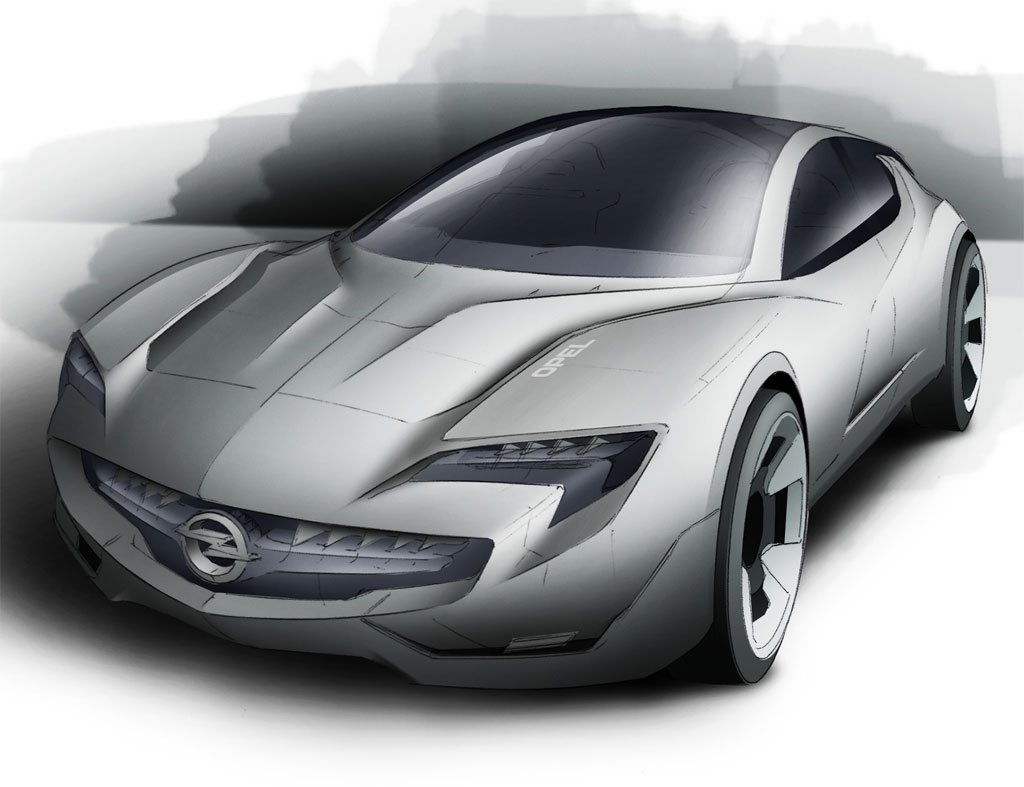
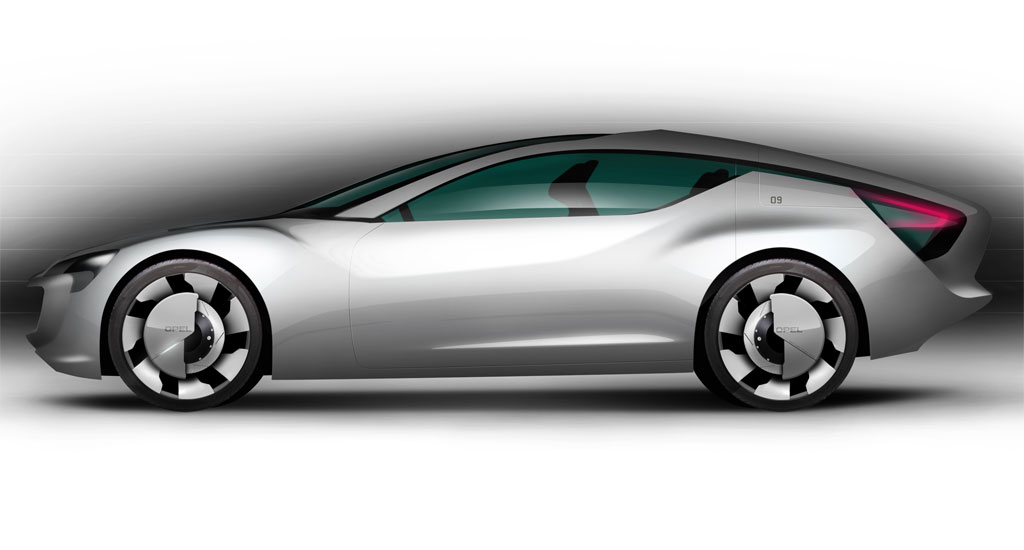
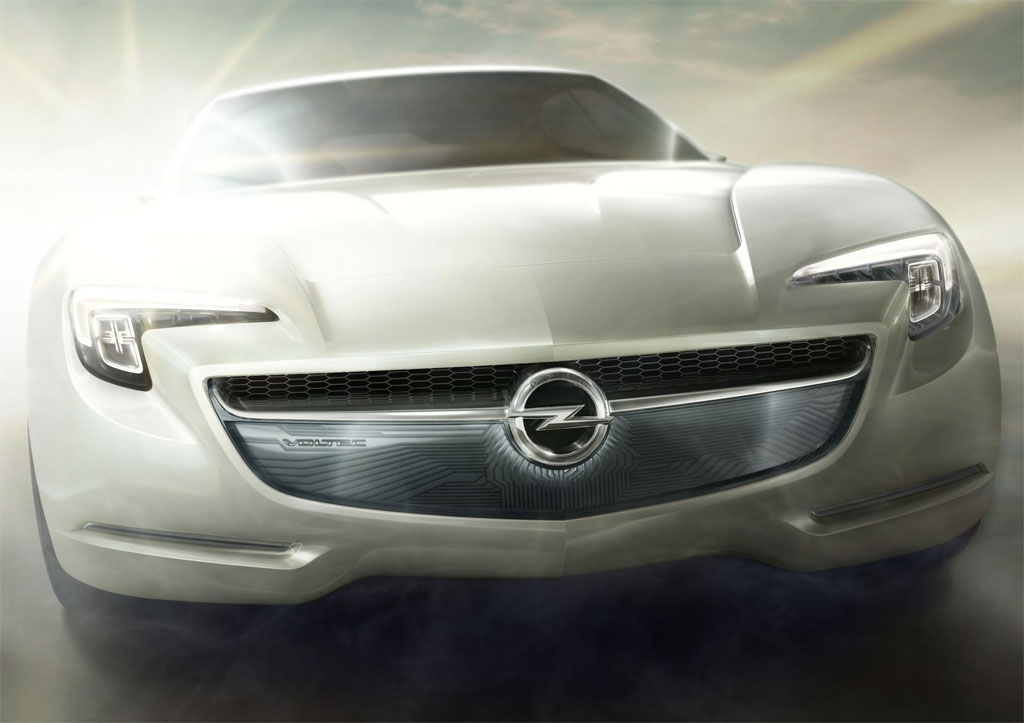
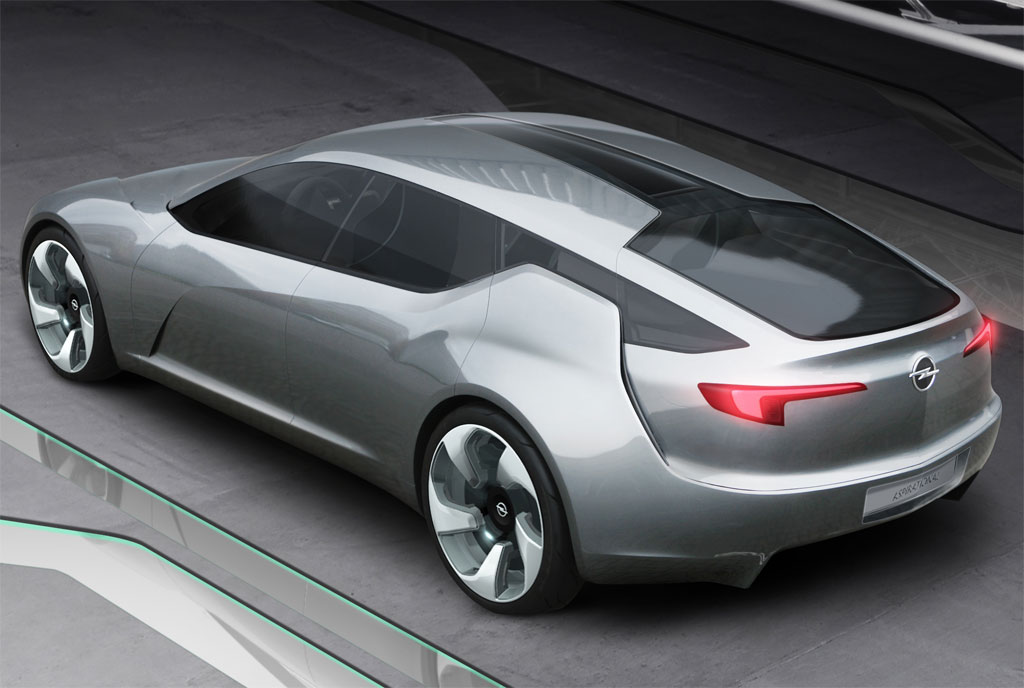
Geneva Preview: 2010 Opel Flextreme GTE Concept


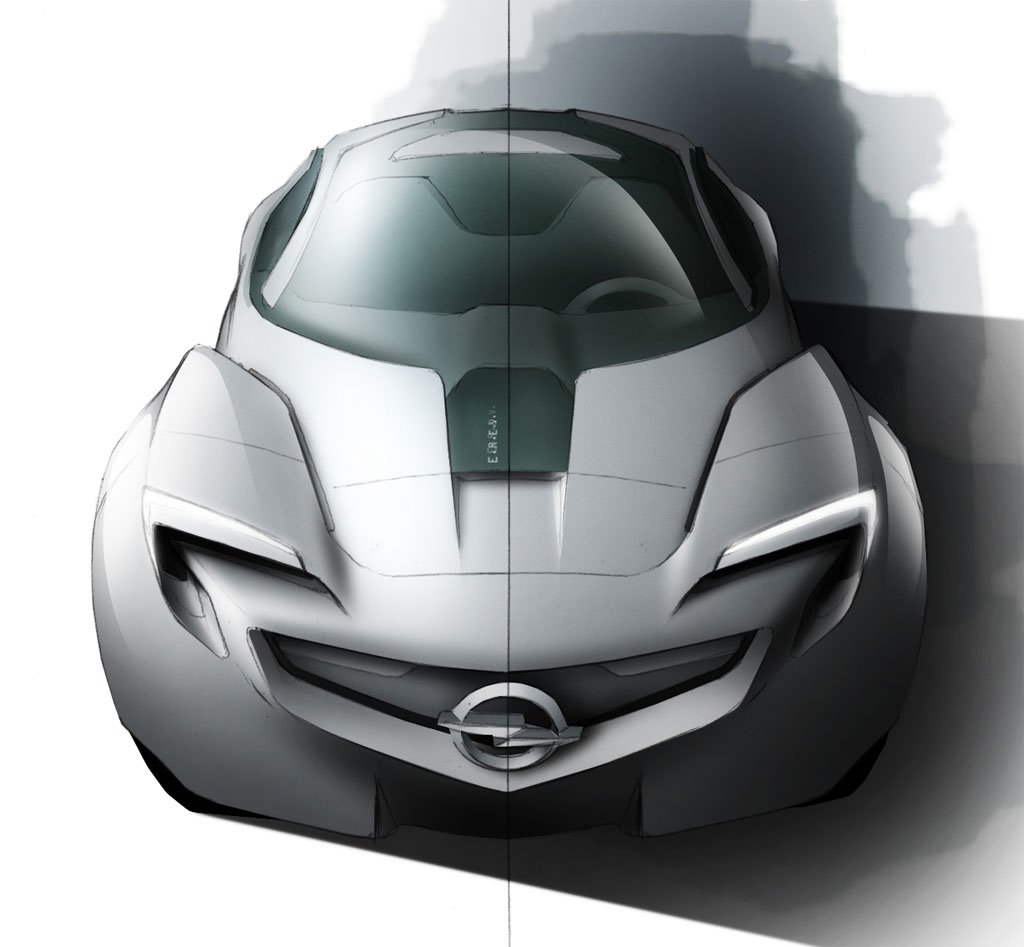
Rüsselsheim. Opel will unveil its Flextreme GT/E concept car at the 80th Geneva Motor Show (March 4 – 14), that will boost the company’s credentials as a leader in green technologies, offering expressive design with efficient environmental performance – and engineered with German precision.

In Opel’s strategy for achieving more independence from fossil fuels, electricity plays a key role. The 4.7-meter long Flextreme GT/E concept illustrates how extended-range electric vehicle (E-REV) technology can be plugged into large or mid-size vehicles, as well as compact cars such as the upcoming Ampera.

Opel calls this strategy e-mobility unlimited: adapting the highly efficient E-REV drive system – which removes the limitations of battery-only power – to vehicles across all market segments. To enjoy zero CO2 driving emissions Opel-style, the Flextreme GT/E concept shows that size doesn’t matter.

The purposeful design also enables the Flextreme GT/E to achieve a projected drag co-efficient of just 0.22, which helps it reach a 200 km/h-plus top speed as well as conserve energy and extend its driving range. Stand-out visual features include a low and wide stance, wing-shaped lights front and rear, a distinctive nose and grille, floating C-pillars and muscular, sculptured bodywork.

“The Flextreme GT/E concept shows the shape of things to come from Opel,” says Frank Weber, Vice President, Corporate and Product Planning. “Bold, expressive and highly efficient, it represents the product strategy we will apply to all our future vehicles, large and small, across all market segments.”


Exterior design: expressing efficiency with emotion

The low, coupé-like proportions of the Flextreme GT/E explore the potential for evolving Opel’s new design language – sculptural artistry meets German precision – within an envelope optimized for aerodynamic efficiency.

The clean, frontal styling features a low hood line and an extended nose section, which is clasped by wing-shaped, signature LED headlamps. These are deeply carved into the front fenders and across the hood line. The new trapezoidal grille execution is slim but bold. The prominent wing-shaped chrome bar carries a large Opel emblem, which doubles as a socket for charging the Flextreme GT/E’s battery pack.

The upper section of the grille is used to admit cooling air, the lower portion being covered by a translucent panel. The absence of additional air intakes allows a low frontal area for aerodynamic efficiency and also enables the Flextreme GT/E to meet future pedestrian protection requirements.

The sculpted hood, with an Opel signature central crease line, features narrow longitudinal vents on either side to draw air out of the engine compartment. The muscular fenders and wheel-arches sweep back into the side-body.

In profile, the Flextreme GT/E is distinguished by innovative, stubbed C-pillars. This floating design allows the glasshouse to be extended rearwards under the arching roofline, emphasizing the flowing lines of the side body. The car’s dynamic character is further underlined by a fresh expression of Opel’s signature blade motif, now a swooping swage line from the base of the C-pillar into the lower front fender.

Access to the cabin is enhanced by the adoption of rear-hinged rear doors, an evolution of the Opel FlexDoors concept from the new generation Meriva monocab. To preserve the clean exterior looks, all door handles are replaced by light sensors. These trigger the doors open when covered by the driver’s or passenger’s hand. To reduce air turbulence, exterior front door mirrors are also absent, replaced by small camera pods in the base of the A-pillars.

At the rear, a strong shoulder line embraces sculpted wheel-arches that further emphasize the Flextreme GT/E’s wide, ground-hugging stance. The coupé look is completed by a steeply raked tailgate, carrying wing-shaped LED light units which echo the form of the front headlamps. Like that of the Insignia Sports Tourer, the tailgate has a wraparound design for improved trunk access. Its deep glass screen is slightly convex to improve airflow.

The translucency of the fixed glass panel in the center of the roof is adaptive, allowing sunlight to warm the interior in the cold of winter, but darkening for coolness in summer. A duct at the rear edge of the roof is for additional cooling of the battery and electronic components.


Managing airflow and saving weight

Integral to the Flextreme GT/E’s expressive looks is the efficiency of the design execution. The small frontal area, low roof height (1308 mm) and a flat, enclosed underbody all enable the car to cleave the air with a minimum of disturbance.

A series of measures optimize airflow management. The 21-inch alloy wheels are relatively narrow, to reduce wind resistance, and fitted with 195/45, low rolling resistance tires. Clear, flush-mounted trim inserts also minimize air turbulence.

The minimal front intake improves airflow around the nose of the car and the underbody sweeps up, venturi-like, at the rear to further reduce drag.

The Flextreme GT/E also explores the potential for active shape shifting. At speeds above 50 km/h, a vertical panel extends along the body from the air extraction slot behind each rear wheel-arch. These 350 mm-long side spoilers guide high-speed airflow around the rear corners of the car, further reducing the amount of turbulence.

Mass reduction measures for the body include the use of lightweight, carbon composite outer panels, polycarbonate window glazing and aluminum alloy structural components. Compared to conventional materials, these offer a 40 percent weight saving which further contributes to reduced energy consumption and an increased driving range.


Innovative propulsion

The efficient concept also includes GM’s ground-breaking E-REV drive system, already developed for the Opel Ampera. The Flextreme GT/E shows the versatility of this technology by displaying it in a larger, mid-size vehicle format.

Despite its greater size and a maximum speed of more than 200 kilometers per hour, the Flextreme GT/E is projected to offer performance similar to that of the Ampera: a battery-powered driving range of up to 60 km – with zero CO2 tailpipe emissions – and a total range of more than 500 km. Average fuel consumption is estimated at 1.6 l/100 km, with CO2 emissions of less than 40 g/km.

Unlike a hybrid vehicle, the wheels of the Flextreme GT/E are powered at all times by electricity. For typical journeys up to 60 km, energy is supplied by a T-shaped lithium-ion battery pack located under the floor and rear seat.

However, unlike a battery-only electric vehicle, the Flextreme GT/E eliminates any possibility of range anxiety through fear of being stranded without power. The small gasoline engine/generator is seamlessly engaged to provide electricity whenever the battery’s supply becomes depleted. In this mode, the driving range is extended to more than 500 km, until the plug-in battery pack can be recharged or the car is refueled.

The motor in the electric drive unit delivers a substantial 370 Nm of instant torque, giving lively performance and projected zero to 100 km/h acceleration in less than nine seconds.

The Flextreme GT/E concept is a further step in Opel’s unfolding strategy for the electrification of the automobile, which includes a wide portfolio of products using battery, extended-range, hybrid and fuel cell technologies.


Opel Flextreme GT/E Concept: Technical Data

Body style
Type 5-door coupé, 4-seat upper mid-size concept vehicle
Co-efficient of drag 0.22
Exterior dimensions
Overall length (mm) 4762
Height (mm) 1308
Width (mm) 1871
Wheelbase (mm) 2900
Front track (mm) 1600
Rear track (mm) 1600
Wheels/Tires
Wheel size 21 inch
Tires 195/45 R 21; extra low-rolling resistance
Powertrain
Type Electric drive, front-wheel-drive
Battery system:
Type Advanced lithium-ion (manganese spinel)
Energy 16 kWh
Nominal voltage 350 volts
On-board charger 3.3 kW
100% recharge time (230V outlet) <>
Electric drive unit:
Max. power 120 kW
Torque 370 Nm
Generator:
Power 53 kW peak output
Engine type 4-cyl. 1.4l gasoline-fueled combustion engine
Performance
Pure electric mode range 60 km
Full range, range extender engaged > 500 km
CO2 emissions, combined cycle (est.) <>
0 – 100 km/h acceleration <>
Maximum speed > 200 km/h

More Photos

Monday, January 18, 2010

Opel Vectra GTS V6 2006


The most powerful engine for all versions of the Opel Vectra and the Signum is an all-new 2.8-liter aluminum gasoline six-cylinder unit with a twin-scroll turbocharger for plenty of power in all driving situations. The sixty-degree V6 with variable valve control delivers 90 percent of its maximum torque of 330 Nm at 1500 rpm. Peak torque is provided across a wide range from 1800 to 4500 rpm. Driving performance with this engine is equally impressive: only 7.3 seconds are required for the zero to 100 km/h sprint and top speed (electronically limited) is 250 km/h - a new record for the Vectra.

Monday, October 5, 2009

Opel prepares model Allegra


According to German edition AutoBild, company Opel has begun work on car absolutely new to which will receive name Allegra. This model becomes the smallest Opel, and among its competitors will appear such models as Smart Fortwo and Toyota iQ.

The length new Opel Allegra will make an order of three metres. However, despite such modest dimensions, in the machine there will be a place for four persons (the same dimensions and possibilities on public conveyance at Toyota iQ). Well and under a cowl of the smallest Opel will start to put petrol and diesel motors in volume of 0,6-1,0 l which will give out 50-100 h.p.

However, while nobody knows, whether can Opel begin serial release Allegra or not. After all now the company financial position very difficult, besides is fast at the company there will be new owners (it is Canadian Magna and Russian "Savings Bank"). So many experts assume that the next years Opel will be compelled to refuse workings out of essentially new models and to concentrate on development of the most popular cars. Such as Astra, Corsa and Zafira.

Thursday, September 24, 2009

Frankfurt motor show 2009: Cost new Opel Astra defined


The architecture of Opel Astra was created by the European designers GM. The car has received new platform GM Delta II which already underlies Chevrolet Cruze, on it creates perspective hybrid Chevrolet Volt and Opel Ampera. In comparison with the previous generation the wheelbase of a new Astra has grown on 71 mm – to 2685 mm. And the body total length has increased with 4,24 to 4,4 metres that by 23 mm more than at the same Golf. A track too have expanded – a lobby on 56, rear on 70 mm.


And what inside? The interior became much more spacious. Convenience of landing at the wheel and workmanship deserves a praise, plastic arts of a torpedo and panels of doors soft and pleasant to the touch. In general, from a novelty we also did not expect another.


The Astra chassis in many respects similar to chassis Chevrolet Cruze. Distinctions in some details and options – ruggedness of springs and absorbers, and also suspenders from Opel absolutely others. Logically, the car is focused on more perfect driving. Aluminium A-shaped levers of front MakFersona to a stretcher fasten through hydrobearing parts, instead of through rubber sajlent-blocks, as on Cruze. The braided beam of a rear semiindependent suspension is less pliable to cross-section loadings as it is strengthened by gear Uatta.


On the New Astra will be an adaptive head optics and system Opel Eye (debuted on Insignia), developed together with company Hella. «Opel eye» by means of the special chamber located under a windshield, watches road signs and in the form of pictogrammes deduces them on a panel board. If the system on "a departuring" marking understands that the driver starts to sink into a sleep, it there and then undertakes to awake with its sound signal.


Astra will receive eight motors, half from which the diesel motors. All of them correspond to ecological norms of Euro-5. A power range 94 – 180 forces. In Europe cars will go on sale within 1-2 weeks. Cost in Germany starts from a mark in 15900 euros .

Monday, September 21, 2009

Bodi-kit for Opel Astra Body from Lexmaul


German studio Lexmaul has presented a weather-cloth for new Opel Astra. Besides, in the beginning of 2010 improvements will be accessible to the engine also.

The structure of a tuning whale included new radiator lattice without logo Opel (also it is possible to order carbon lattice), a moulding-jalousie on a modesty panel, mouldings on head lights, thresholds, the choke tube and a spoiler on a roof behind. Besides, some variants of the exhaust systems most expensive of which can brag of presence of four exhaust bores are accessible. Besides it, Lexmaul offers firm 18, 19 and 20-inch wheel disks.

The future complete set of versions for the engine will add to it about 20 % of capacity.

Tuesday, August 25, 2009

The first photos new Astra from Irmscher


Expected with huge impatience new Astra from Opel till now is in couple of months from occurrence in interiors of the dealers, however the given circumstance at all does not confuse the German tuning studio Irmscher specialising on products of this German motor-car manufacturer. Without thinking twice, the company has presented lovely enough sports weather-cloth for a new hatchback.

The official presentation yet was not, so you see really unique photos on which are quite distinctly embodied a new spoiler on a front bumper, the thresholds, new radiator lattice and the rear skirt leaving enough spaces for four exhaust pipes. Besides, Germans offer 18 and 20-inch wheel disks, aluminium mouldings on pedals, unique rugs and the complete set of the truncated springs. The presentation of a collection from Irmscher will take place on a motor show in Frankfurt.


Monday, August 17, 2009

RIEGER tuning Opel Astra H and Corsa D


Tuning studio RIEGER has exhausted new stylings-packages for Opel Astra H and Opel Corsa D. Astra H receive the new front bumper, optionally has received natural light LED-headlights, the aggressive lateral skirts, a new rear bumper, and also the sports rear choke tube. Among other details - masks on headlights, a sports exhaust system with four tubes, suspender H&R underestimated on 30 mm, and also 19-inch disks Brock B21.

RIEGER Corsa D has received expansion of a modesty panel and bright lateral skirts, and also the modified rear bumper, the new rear choke tube, a sports exhaust system with double oval tubes, and also coilover suspender KW and 19-inch white disks Brock 17 RC.

Wednesday, April 15, 2009

Opel prepares for a premiere "charged" Insignia!


On May, 7th "charged" version Opel Insignia OPC will be presented. The premiere of the charged version «Best European car of 2009» will take place on a motor show in Barcelona, later 10 years after an exit on the market of first model OPC (abbreviation OPC specifies that the car is created by special division Opel Performance Center).


In comparison with less powerful versions, Insignia OPC has more effective design of a front part of a body with two big, vertically located air intakes. Besides, the car differs an original rear bumper with two integrated shafts of an outlet pipe. Wheels in diameter of 19 inches enter into a base complete set (with tyres a standard size 245/40) which give Insignia OPC a kind reflecting its outstanding characteristics. New easy shod wheels diameter 20 inches (with tyres 255/35) are offered as an option.

Dynamical and sports style of an ex-terrier is repeated and in design of a cockpit. Interior OPC makes strong impression at once as soon as you will open a door. This effect is created by all details: from unique seats Recaro to a sports steering wheel with a flat heel and an original lever handle of a gear shift. «Insignia OPC marks the beginning of a new era for cars with brand OPC. It possesses still courageous, but more mature and perfect design, and looks even more ambitious, than earlier. Version OPC embodies all experience which has been saved up by founders of model Insignia: it is the dynamical and refined car», - Alan Visser, vice-president GM Europe Opel considers.


"Heart" Insignia OPC is an engine 2.8 V6 Turbo. It has appeared as a result of completion of the gasoline engine by capacity of 260 h.p. which is established on flagman version Insignia. The capacity increase is reached at the expense of change-over of engine management systems, and also modernisation of final system thanks to what it has been reduced reverse pressure to a stream of the fulfilled gases. Besides experts-acoustics have worked over final system of engine V6, having engaged in it the central and final part of the muffler of a special design. On Opel Insignia OPC the six-step mechanical gear box will be established. The impressive twisting moment of the engine - 400 Nm - guarantees a pull-rod avalanche even on low turns. Thanks to new "heart" Insignia OPC reaches the maximum speed of 250 km/h (it is limited by electronics), and the acceleration time of the car from 0 to 100 km/h makes only 6 seconds.


And without that excellent chassis Insignia has been carefully finished for version OPC. So, the road gleam has been reduced by 10 mm in comparison with version Insignia AWD Sport (the equipped system of an all wheel drive). On Insignia OPC the same architecture of a front suspension has remained: with racks the Poppy-ferson, however engineers from Opel Performance Center have gone on the way their evolutionary change, having developed so-called «HiPerStrut» - racks with even more progressive characteristics. They provide to the car such advantages, as optimum sensitivity of a steering, immunity to vector deviations because of the raised twisting moment, and, as the result, reference roadability which will be by all means estimated by drivers.

Besides, for Insignia OPC adaptive suspender FlexRide which adapts not only to road conditions and style of driving, but also to preferences of the driver is accessible. While on base model Insignia the system allows to choose between standard options of an adaptive suspender, more comfortable and "sports" modes, suspender OPC is obviously addressed enthusiasts who enjoy sports driving. On a choice three sports modes are offered drivers OPC: standard (with the parametres of the chassis providing raised comfort), a special mode "Sport" and mode OPC - for achievement of optimum dynamic characteristics. For the first time for cars from family OPC as the base equipment are offered system of all wheel drive Adaptive 4x4 and rear interwheel differential of the raised friction with electronic control (eLSD). The electronic block steering system of an all wheel drive, was a new to adapt for sports philosophy OPC distribution between wheels of a twisting moment of the engine. In view of the raised dynamic characteristics of version OPC, experts Opel have made the big efforts the further improvement of a braking system. Experts will by all means estimate brake calipers Brembo and ventilated brake plates in diameter of 355 mm established on front wheels.

Thursday, April 9, 2009

New Opel Astra. The first official PHOTOS!


There first official photos of new generation Opel Astra! Thus at once it is necessary to tell – on sale the model will appear still at a distant day, after all its premiere is planned only for September. In September in Frankfurt it will be shown 5-doors hatchback which should become the most popular. But Opel has published not only hatchback pictures, but also two sketches. On one of them it is drawn "charged" 3-doors Opel Astra GTC which will resemble more a coupe, and on the second we can see a practical station wagon.


Predictably, in Opel have decided not to spend courageous experiments with design and have gone by the way of evolution. But thus new Astra looks much more interesting than the present car. At the heart of model the same front-wheel platform on which it is already constructed Chevrolet Cruze will lie. However it does not say to us that Astra will go the same as and Cruze. The German car, for certain, will receive the character – on idea, Opel should become more sports.


Under cowl Astra will start to put the new gasoline engine in volume of 1,4 l with a turbo-supercharging which will give out 120-140 h.p., and its twisting moment will make 175-200 Nanometers (exact figures are not known yet). There will be also other motors, including volume 1,8 l and 2,0 l, however, the basic rate will become nevertheless on the economic 1,4-litre unit. It is supposed that sales 5-doors Astra will begin already in the end of this year. And here 3-door GTC and the versatile person will appear only in 2010.
Related Posts Plugin for WordPress, Blogger...